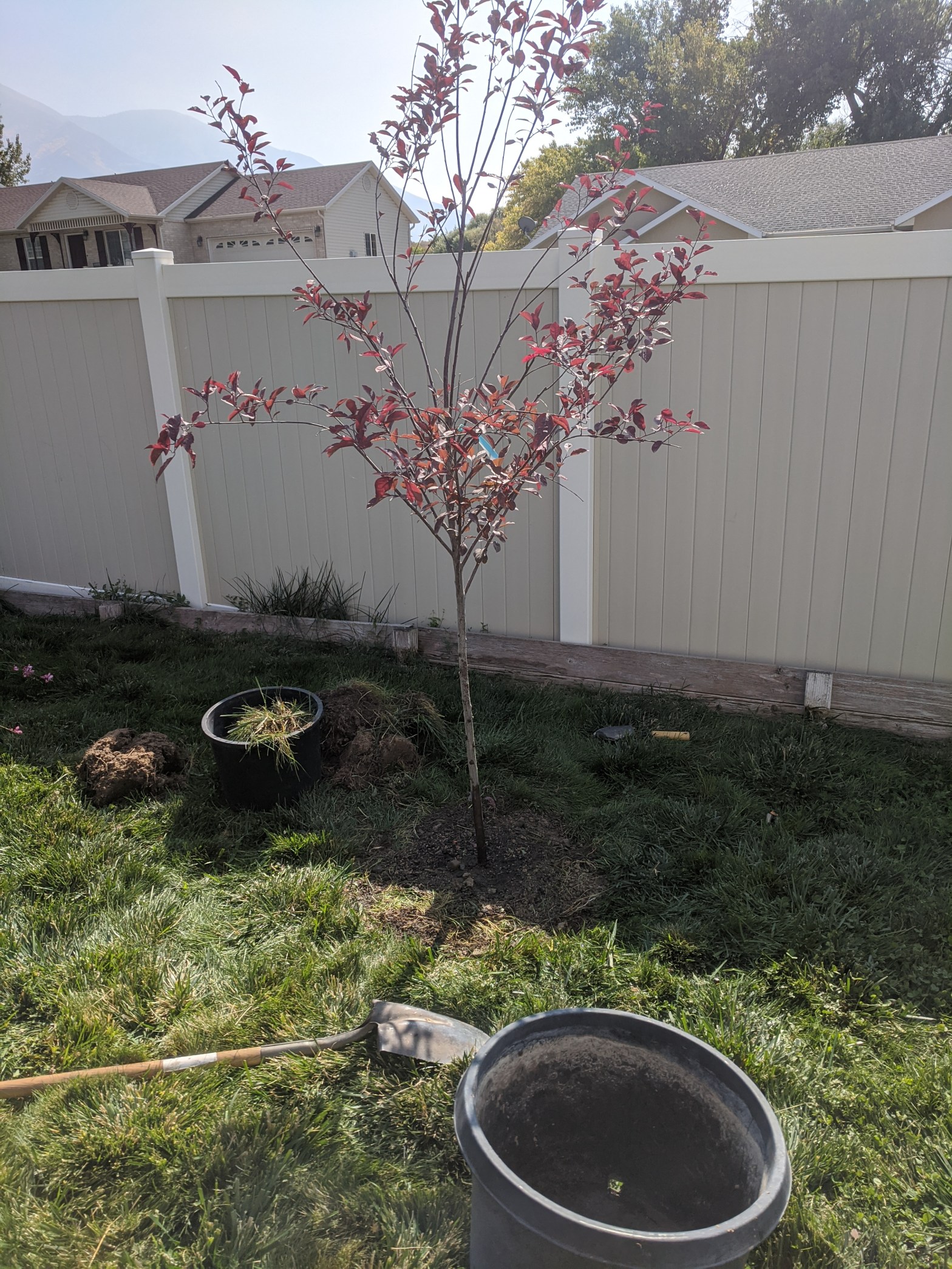
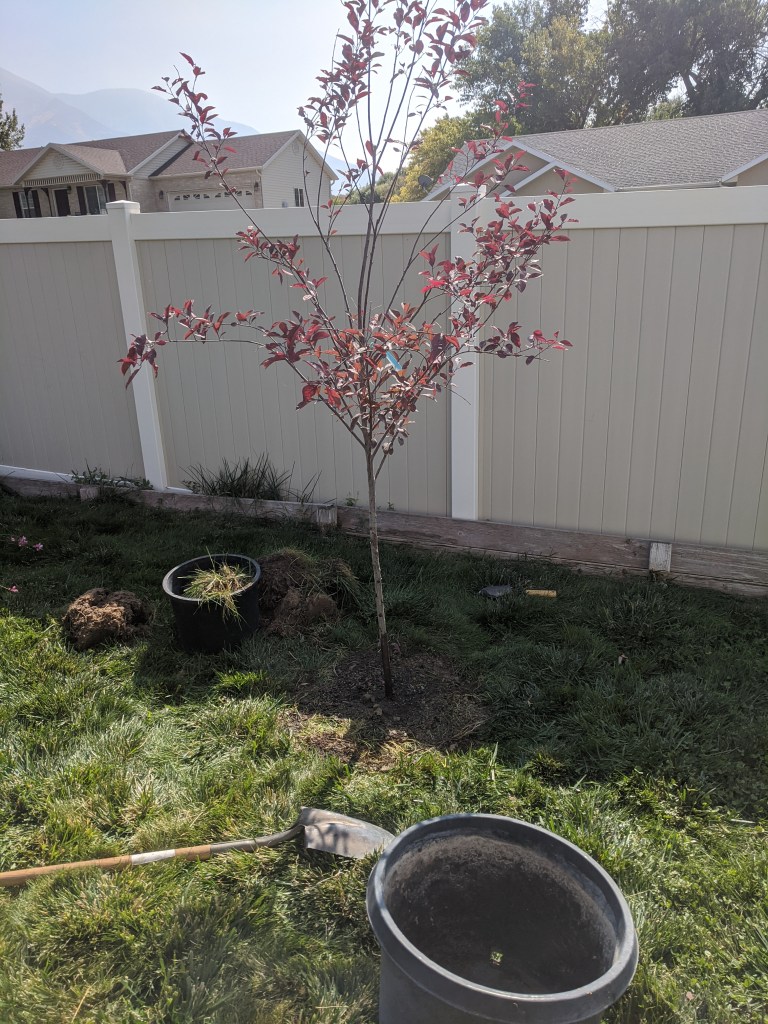
I chose this Big Cis plum tree to block the line of sight from across the street to my back patio because of its beautiful leaves and perfect size. Arborists can look down on red leaf plums because they are overplanted in some areas and they only live about 20 years, making them a short-term planting compared to other trees. I haven’t seen them planted much in my neighborhood, and I decided I’m okay with trying out one short-lived tree. I’ll expect to replace it when the time comes.
One of the instructors for my county’s master gardener course said that too many people take a $50 tree and put it in a $10 hole, when really the reverse should be true — a $10 tree being planted in a $50 hole. Ideally the hole the tree goes into should be twice as wide across as the pot the tree is coming from. For this tree I dug a hole that was several inches wider, but not twice as wide as the pot, and I started kicking myself for it as soon as I had the hole filled and the tree watered in. There’s a good chance the tree will be fine, especially since I gave it some extra space, but I will hate it if the tree does fail in a couple years and I learn that the hole was the cause of it.
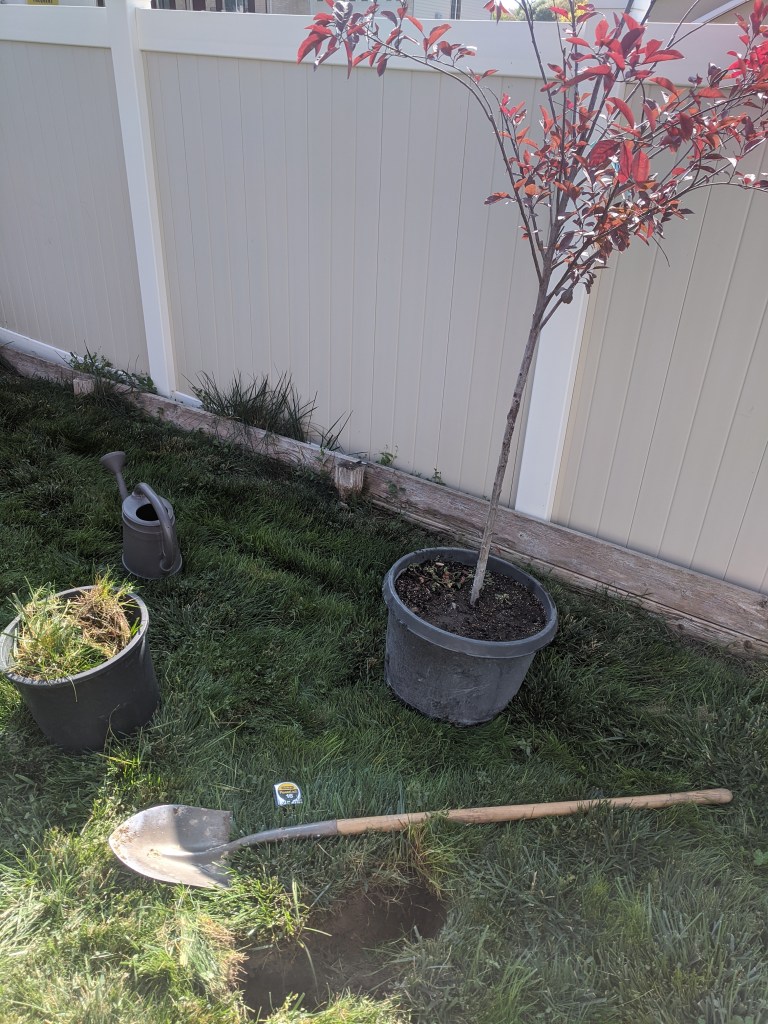
The reason to dig a wide hole is that the tree’s roots can have a hard time crossing into the firm, undisturbed soil outside the hole. They can even react to the edge of that firm soil as if it’s the edge of a pot, and start circling inside the turned soil of the hole. A tree can thrive for a year or two while their roots circle like this, but the roots will eventually strangle themselves and the tree will weaken and die. Digging a wider hole is supposed to make it so the roots are a little stronger by the time they reach the edge of the hole, a little more used to the native soil, and can push more tenaciously across that border.
One last planting tip from my master gardener class was to not fill the planting hole with compost or fertilizer but to use the exact soil you dug out in the first place. The reason is much the same as for digging a wide hole. If the planting hole is turned into a rich and loamy oasis, the roots might balk at entering the heavy native soil beyond the hole. Instead, fill the hole with native soil and topdress the entire area as you normally would with fertilizer or compost.
 mind and heart