
The record heat we had this summer was not kind to this young paperbark maple in its first year in my yard. It only has a handful of leaves, and most of them have suffered from sun scorch.
I’m interested to see whether this tree ends up doing well. On one hand, USU’s Tree Browser says the paperbark maple “definitely should be planted [in Utah] more often,” and lists that it is “fairly” drought tolerant (although other sources say it is happiest in moist sites), adaptable to different soils, has medium tolerance to alkaline soils, and is attractive with reddish peeling bark and good fall color. That all sounds wonderful!
And yet, of the three paperbark maples growing on BYU’s campus, none are very impressive. When I visited them in Spring 2019, the one that looked best from a distance had a lot of dead wood on it. Another was just a funky shape. Definitely, none of them had the beautiful spreading canopies you see in photos of this tree grown in other parts of the country. (BYU’s Tree Tour site says its spread is usually about half the height, which doesn’t seem to be true in other places.)
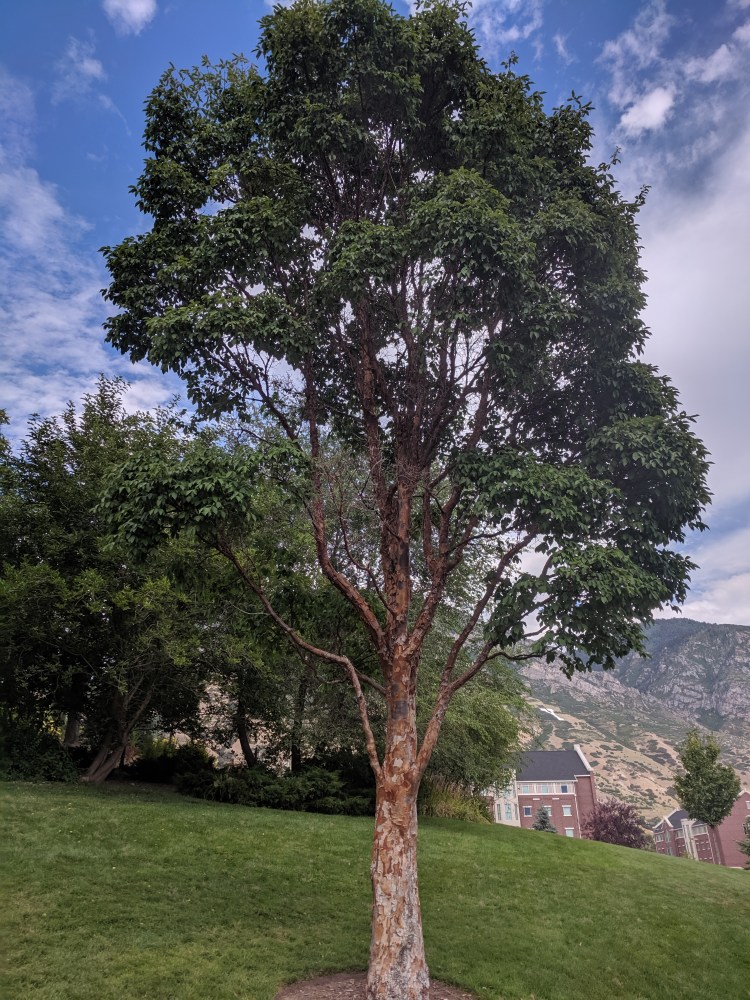
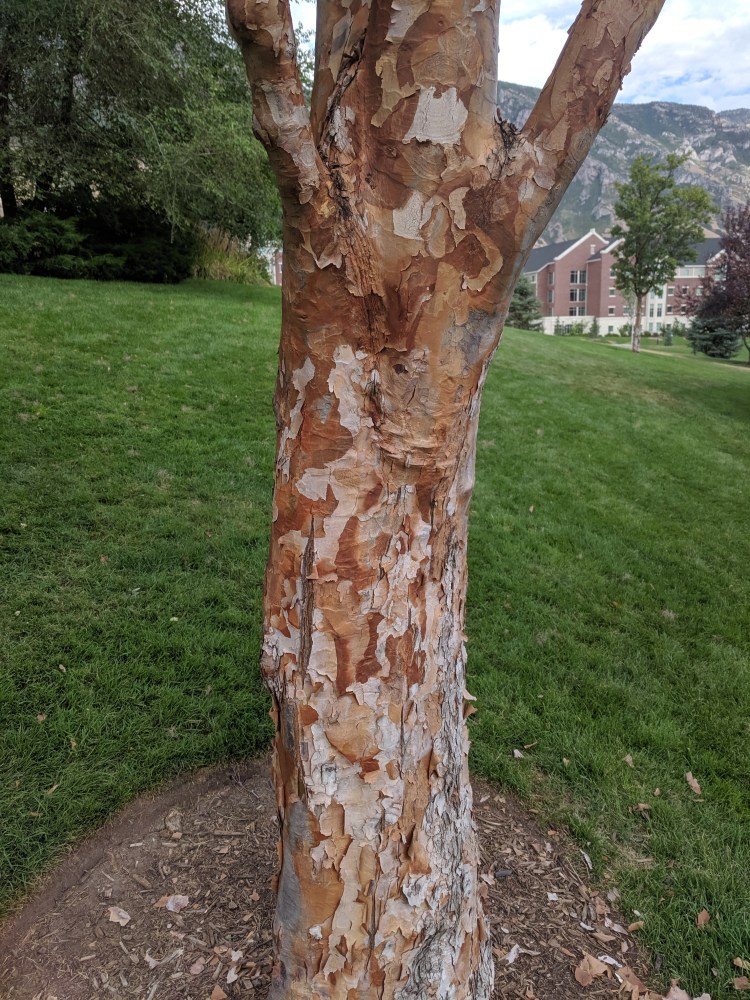
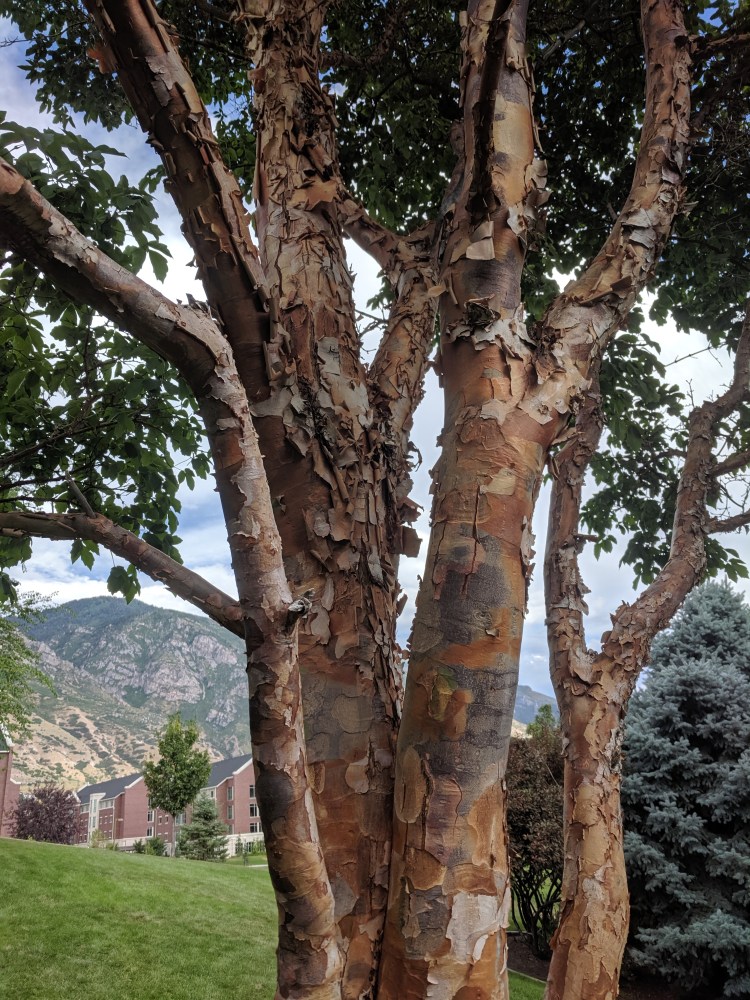
But a funky shape can still be attractive, and maybe the fall color and cool peeling bark will make it a nice specimen. It is supposed to be a decidedly slow growing tree, so it may be many years before I see how it turns out. Hopefully I at least see fewer leaves damaged by sun scorch next year as the roots get more established.
 mind and heart